

scullery kitchen design is a purposeful secondary kitchen space that keeps prep and cleanup away from the main kitchen so the main area stays tidy and social.
Key Takeaways
- A scullery separates messy tasks from the main kitchen offering extra prep sinks, storage and concealed appliances for cleaner entertaining.
- Design to support a clear workflow delivery to prep to cook to clean and specify extraction and plumbing early to avoid cost growth.
- Market interest is growing. See market sources for 2024 size and trends and plan research for costs and code guidance before budgeting.
The Core Concept
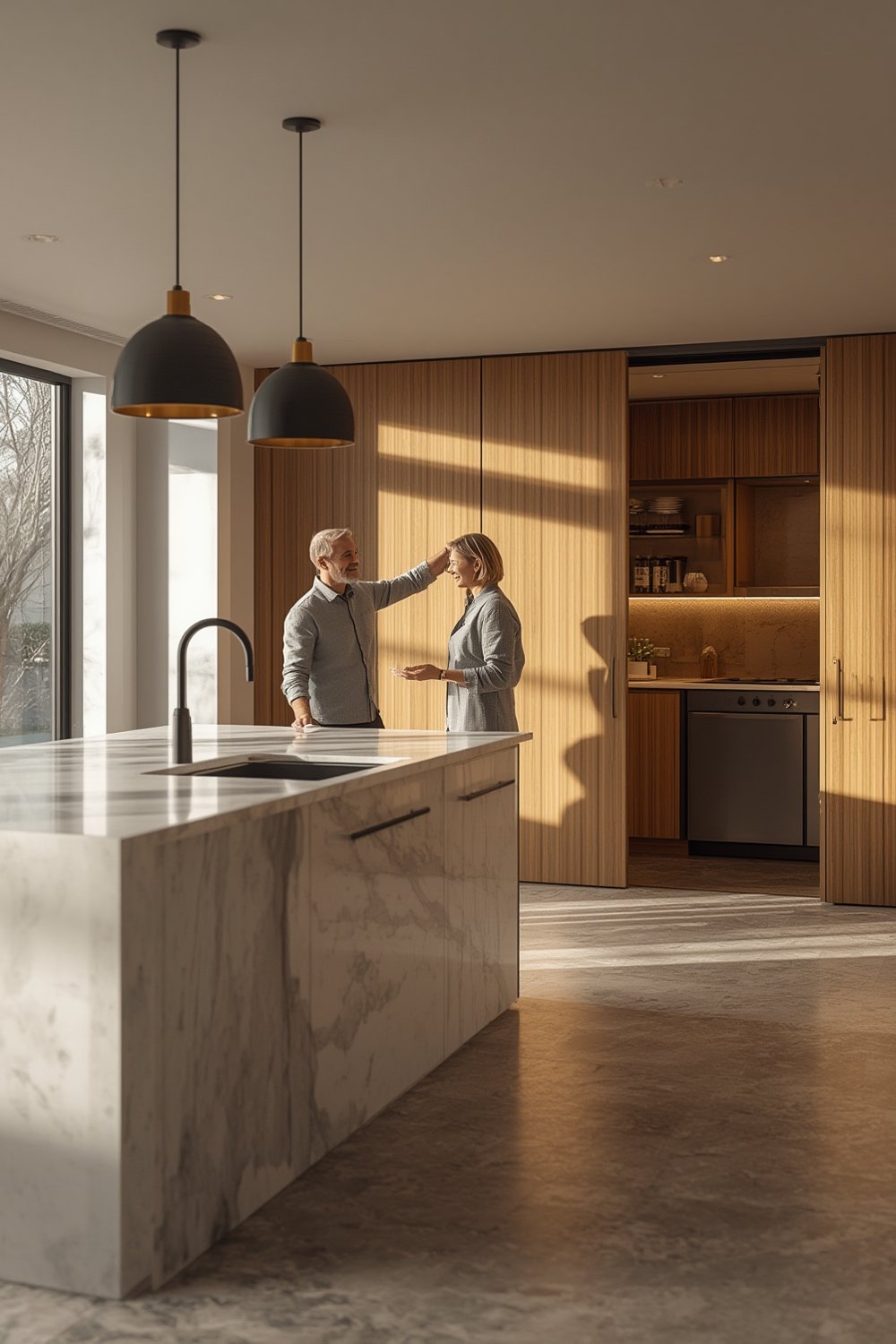
A scullery is a small separate work kitchen that supports the main kitchen by handling storage, prep and cleanup. For practical remodels a scullery typically includes additional bench area, a prep sink, underbench refrigeration or freezer storage and dedicated cabinetry for cookware and comms like bulk storage. The why is simple. It reduces visible clutter, shortens clean up time after events and allows the main kitchen to be used for plated service and socializing.
Market context and what the research shows
Global interest is measurable. A 2024 market report estimates the scullery market at USD 8.2 billion with mid single digit growth projections. For a quick industry reference see the market report growthmarketreports. Design surveys from the American Institute of Architects indicate more owners are adding secondary prep areas. For trend context read the AIA home design trends summary here.
Step by Step Guide
This section gives a practical process you can follow from brief to completion and the minimum topics to lock in early to avoid surprises.
- Define the function
Decide which tasks move to the scullery. Typical tasks include washing, bulk unpacking of deliveries, dough and baking prep, and staging dirty dishes. Keep this list succinct it guides equipment choices.
- Determine the adjacency and footprint
Prefer locations adjacent to the primary kitchen or service entrance. A scullery can be a closed room or a concealed cabinet run. For tight footprints use shallow depth cabinets and tall storage to keep counters for prep.
- Plan workflow and zones
Map a delivery to clean workflow. Example zones are receiving, cold storage, prep, cook staging and dirty. Keep paths direct and avoid cross traffic across the prep bench.
- Plumbing and mechanical
Specify sink type and drainage slope. If you plan an extractor over a cooktop in the scullery specify clearance and discharge route. Confirm local permit needs early. If unsure, budget for a professional site check.
- Appliances and concealment
Decide which appliances you want visible. Common scullery choices include a second dishwasher, undercounter refrigerator or freezer and compact range or cooktop. Use drawer dishwashers or panel ready units to maintain a clean look. For storage accessories consider YouCopia StoraLid and drawer organizers like madesmart silverware trays.
- Finishes and cleaning
Choose durable, wipeable surfaces for counters and splash zones. Matte finishes hide marks but require more frequent cleaning. Install undercabinet task lighting to make prep safer.
- Schedule and procurement
Order long lead items early. Lock cabinets and appliances before demolition where possible. Include contingency for unseen plumbing or structural work in older homes.
- Test and tune
After install run a scenario test from delivery through clean to identify missing hooks, bins or outlets. Adjust before finalizing punch lists.
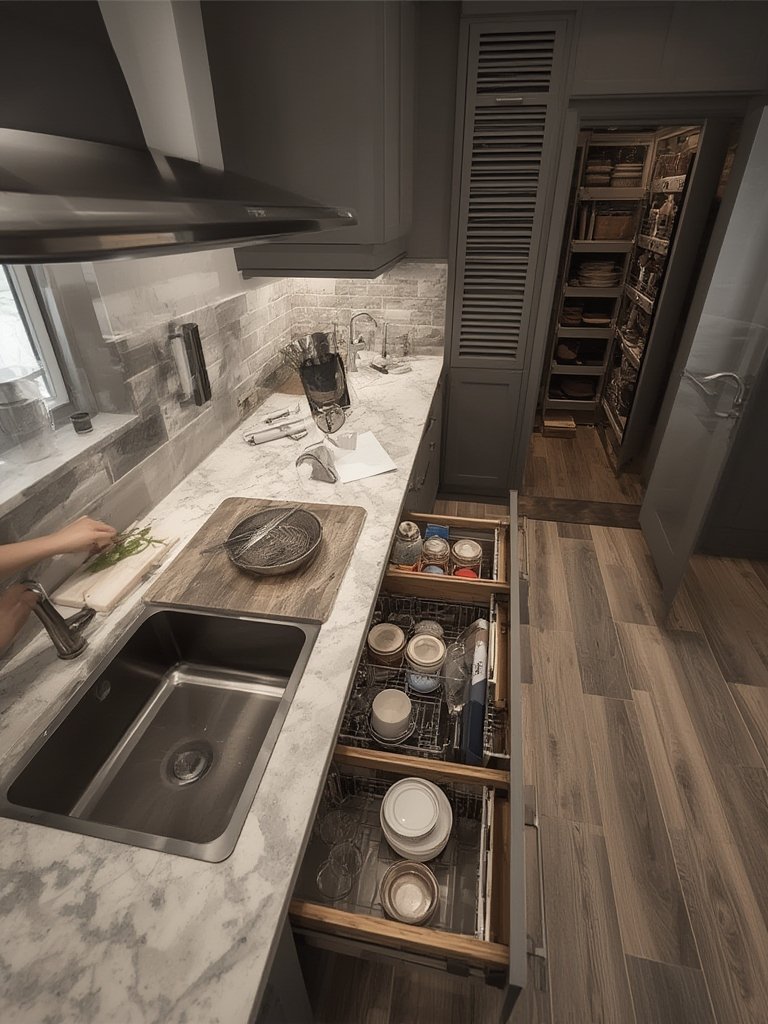
Project examples and product choices matter. For under sink organization check Copco under sink caddies. For airtight bulk storage use Rubbermaid dry food containers. Those small choices speed handoffs and reduce waste.
Advanced Analysis and Common Pitfalls
Use the research data to set realistic expectations. The market and trend reports show rising interest but they do not replace project level cost analysis. Expect gaps in publicly available cost data and code interpretations. Below are common pitfalls and mitigation tactics.
| Pitfall | Why it happens | Mitigation |
|---|---|---|
| Late mechanical changes | Decisions on extract and plumbing deferred | Specify routes at schematic design and have MEP price options |
| Underestimating storage needs | Owners think scullery is only for a sink | Audit pantry items and equipment then design fixed storage and clear bin sizes |
| Access and traffic conflicts | Poor adjacency planning | Map staff and family movement and adjust clearances and door swings |
| Unplanned extraction noise | Powerful fans placed near living spaces | Specify low sone fans, install sound attenuators and locate discharges away from quiet zones |
The research report provides macro numbers and trend confirmation. For market size and forecast see the scullery market report growthmarketreports. For qualitative trend confirmation read the kitchen trend article at Advantage Contracting.
Conclusion
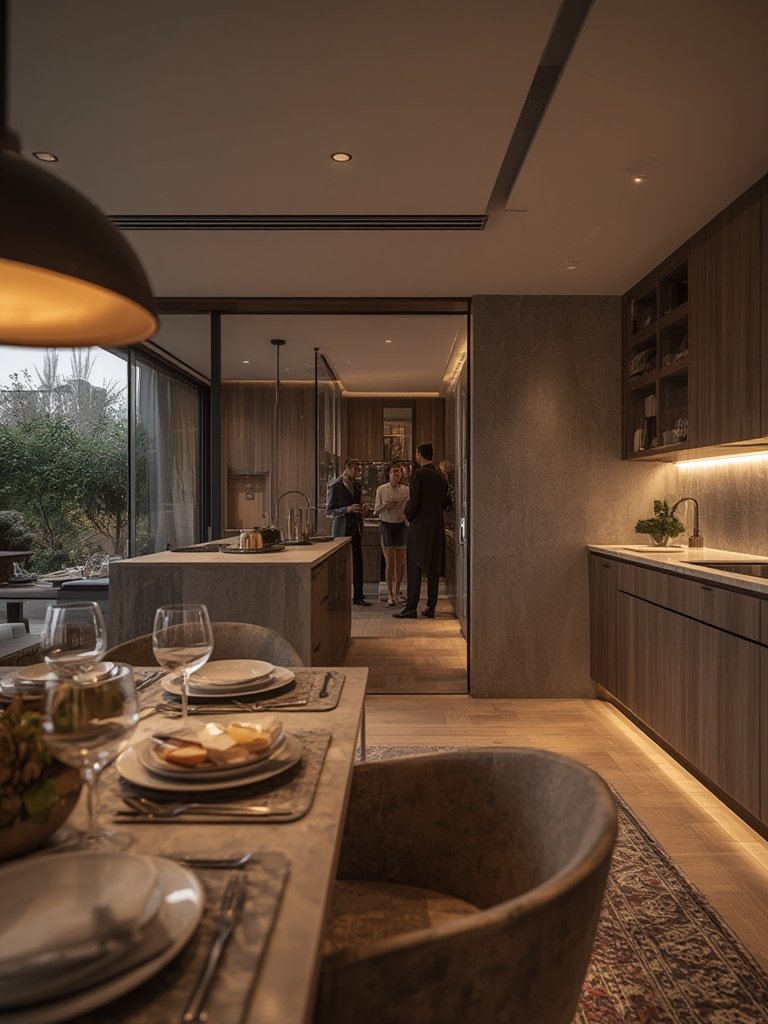
Sculleries deliver functional separation that supports entertaining and heavy prep tasks while keeping the main kitchen presentable. Use the step by step approach above to reduce risk. Prioritize mechanical routing, appliance lists and storage dimensioning early. Market data shows growing interest but does not replace project specific budgets and code checks.
If you are ready to move from idea to plan get a shortlist of local contractors and request itemized quotes that separate mechanical, cabinetry, finishes and appliances so you can compare like for like. For further reading on market sizing and trends refer to the external resources cited in this article.
Final note: put the scullery on your checklist when you want a kitchen that works hard but stays elegant in daily life. If you want help with an initial checklist we can prepare a short tailored scope that you can use to get accurate contractor quotes.
FAQ
What is the difference between a scullery and a butler pantry?
A scullery is function first and usually includes sinks, prep zones and larger appliances for cleaning and staging. A butler pantry is often oriented to storage and service staging for entertaining. There is overlap. Define your primary use to pick features.
How much space do I need for a useful scullery?
There is no single answer. Small sculleries can be as little as a shallow 120 centimeter run with a prep sink and storage. Larger sculleries will approach a full second kitchen. Create a needs list first then confirm the minimum clearances with your cabinet maker or architect.
Do I need a separate extractor?
If you will have combustion or active cooking in the scullery you need an extractor. Even for heavy baking a local exhaust will prevent odors and grease from spreading. Specify discharge routes and sound levels early.
Will a scullery add value to my home?
Qualitatively yes. Industry commentary indicates sculleries are desirable for buyers who entertain and for luxury markets. Quantitative resale lift will vary by region and buyer profile. Collect regional MLS comparables to estimate uplift.
Where can I find design and cost data for a scullery?
Use specialized cost databases and local contractor quotes. The market and trend reports cited above provide high level context but not line item costs. Consider RS Means or local contractor estimates for accurate budget planning.