

curved kitchen island design changes how a kitchen flows and how people use the space.
Key Takeaways
- Curved islands are design first items that need early structural and workflow planning.
- Get specific fabrication drawings and reinforcement details before signing a contract.
- Plan storage and seating as custom items to avoid wasted space and cost surprises.
Table of Contents
Section 1 The Core Concept
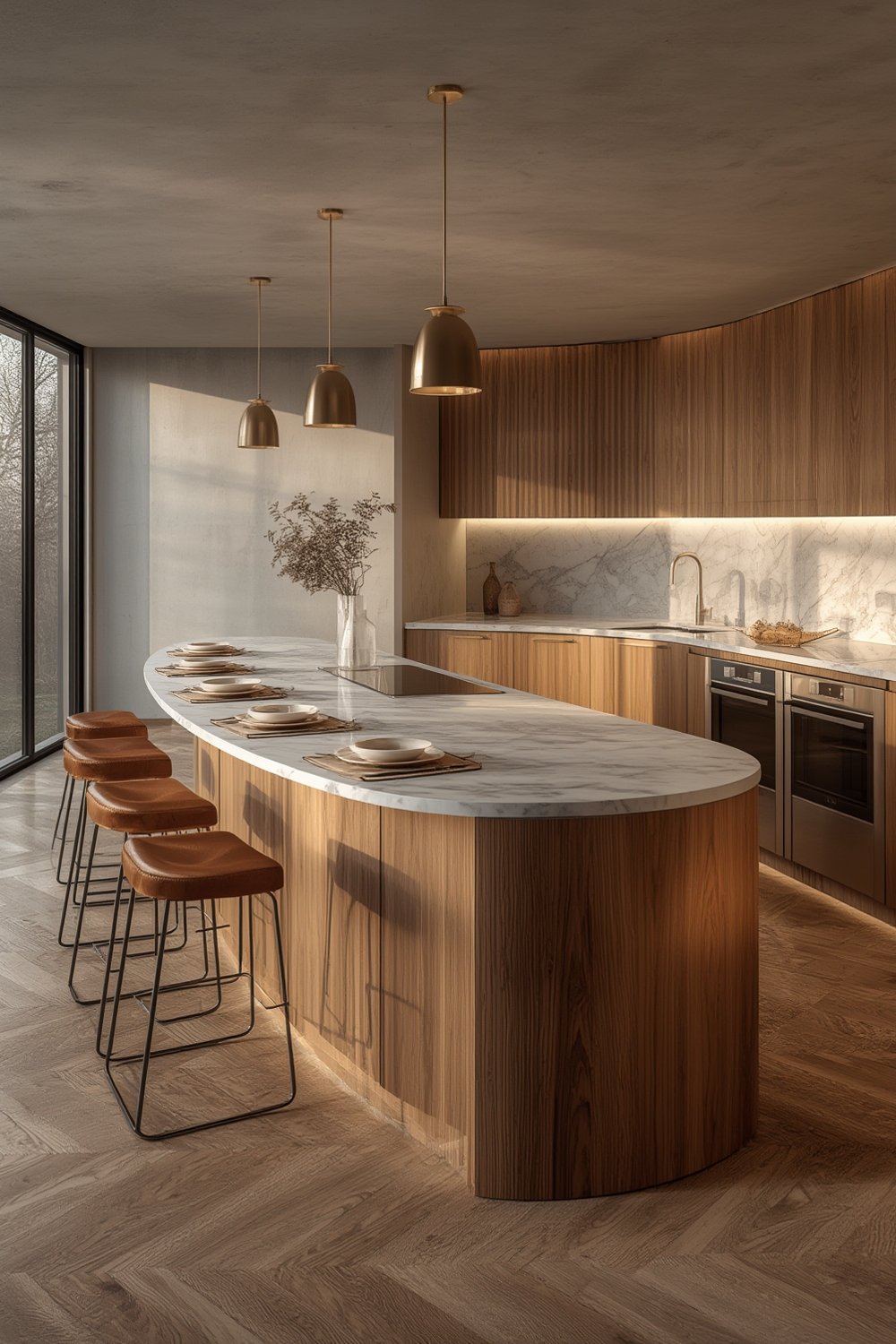
A curved kitchen island is a freestanding or built in work island with flowing geometry instead of straight lines and square corners. Designers choose this approach to soften lines to improve movement through open plan rooms and to create a sculptural furniture style focal piece. Practical reasons to pick a curved form include better circulation where a straight corner would block a walk path and the ability to make a seating area feel more social.
Curved islands are not more common than rectangular islands. Rectangular islands remain the most popular choice because they provide more usable workspace and easier storage layout. If you want more context on shape pros and cons read a short comparison at MLS Kitchens Manchester here and a design overview at Homestyler here.
Section 2 Step by Step Guide
1 Define goals and constraints
Decide three priorities in order. Typical priorities are maximized prep area, integrated seating, and sculptural form. Measure the room to confirm you have the clearance to support a curved island and the required work triangle distances.
2 Check clearances and workflow
Before design start confirm clearances for walking and appliance doors. Use a mock up footprint in tape or cardboard to test flow and seating positions. Curved edges improve flow when you have at least two sides open to traffic.
3 Choose construction approach
Decide prefab modular cabinetry versus fully custom furniture style carcass. Prefab saves time and money if your curve is subtle. Fully custom construction is required for dramatic organic shapes that have arc panels or integrated turned legs.
4 Select countertop material by performance
Different materials behave differently on a curve. Request material samples and talk to the fabricator about minimum radius and edge thickness for each option. Ask whether the supplier can produce rounded edges as part of the countertop or whether a secondary edge treatment will be required.
5 Get engineering and CAD drawings
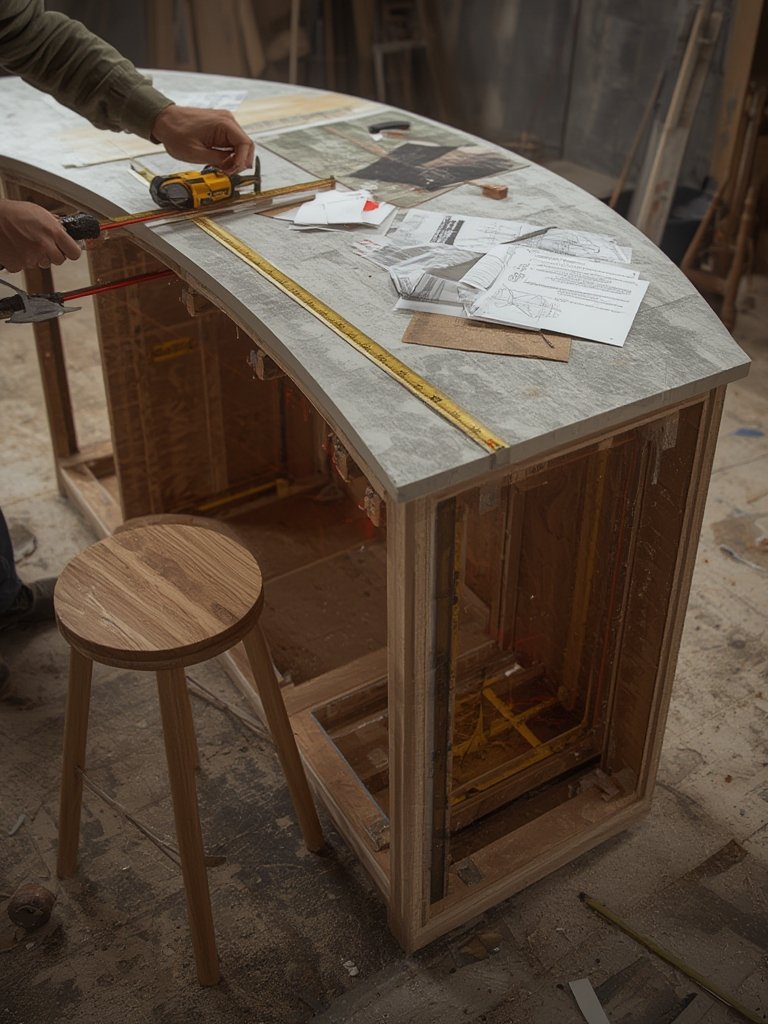
Require dimensioned CAD drawings from the cabinet maker and from the countertop fabricator. These drawings must show mounting details and reinforcement for any unsupported overhangs. Ask for connection details where the island meets floor support or freestanding legs.
6 Plan services and connections
Document electrical and plumbing needs early. If the island contains a sink or cooktop place the drain and vent locations in the preliminary drawings. For islands with curved cabinet fronts factor extra time for plumbers and electricians because routing through curved panels can require tweaks on site.
7 Approve shop drawings and mock ups
Sign off on detailed shop drawings and on a full size paper template or foam mock up. Do not approve fabrication until shop drawings show exact radius dimensions and reveal methods.
8 Installation and finishing
Plan for a multi day on site install window. Curved pieces and rounded countertops may require site finishing to blend seams. Protect adjacent surfaces during install and plan for cleanup of fabrication dust for materials like concrete and stone.
9 Final checks and maintenance plan
Document a maintenance schedule for the materials chosen. For example sealant re applications for natural stone and routine checks for hardware that is mounted into curved panels.
When organizing storage on a curved island consider drawer systems and modular bins. Use quality modular storage containers to keep items tidy and accessible. See options like OXO Good Grips POP Container – 4.4 Qt/4.2 L, Airtight Food Storage Containers and Freshware Food Storage Containers [50 Set] 16 oz Plastic Deli Containers with Lids, Slime, Soup, Meal Prep Containers | BPA Free | Stackable | Leakproof | Microwave/Dishwasher/Freezer Safe for pantry style integration. For fridge adjacent roll out bins consider YouCopia RollOut Fridge Caddy BPA-Free Clear Rolling Refrigerator Organizer Bin with Adjustable Dividers and Handles, 9″ Wide. For general fabric storage cubes use Amazon Basics Collapsible Fabric Storage Cube Bins Organizer with Handles, Sturdy, Beige, 13-x-13-x-13-inch, Pack of 6. For airtight food storage choices consider Rubbermaid Brilliance BPA-Free Food Storage Containers with Lids, Airtight Clear Set of 2.
Section 3 Advanced Analysis and Common Pitfalls
Curved islands look great but create special challenges. Below are the most common issues and practical mitigation steps.
- Storage inefficiency because arcs reduce regular rectangular drawer volume. Mitigation plan Ask for custom drawers and internal organizers designed to use arc shaped voids.
- Fabrication mismatch when shop drawings are incomplete. Mitigation plan Require full size templates and mock ups before cutting expensive stone or surface material.
- Higher labor and finishing time due to site trimming. Mitigation plan Build slack into schedule and contract to allow for on site fitting.
- Cost surprises for rounded edge countertops. Mitigation plan Get written line item quotes for edge work and radius polishing prior to order.
| Topic | Prefab islands | Custom furniture style islands |
|---|---|---|
| Design options | Limited arc options matched to modular sizes | Any organic form with bespoke joinery |
| Lead time | Shorter when parts are stocked | Longer due to shop fabrication and finishing |
| Fit and finish | Good for simple arcs | Superior for complex curves and integrated details |
| Cost control | Easier to predict materials cost | Greater variability without tight scope |
Because public market data for curved island adoption and exact cost breakdowns is limited rely on local fabricators and quotes. Competitor guides note that rectangular islands remain the typical choice and that curved islands are best where room and budget allow. See US Cabinet Depot overview here and a quick shape size guide at Cabinet World here.

Conclusion
Curved islands change circulation and create visual focus. They require early technical planning for cabinetry and countertop fabrication and for services. If you value flow and a furniture quality centerpiece and if you accept extra planning and likely higher labor then a curved kitchen island can be the right choice.
The next step is to require CAD shop drawings and a signed scope that lists reinforcement and finishing line items before any manufacturing starts. If you want a checklist to give to a fabricator request a shop drawing checklist and mock up approval clause before deposit.
Ready to move forward Ask for two detailed bids that include CAD shop drawings mock up costs and a timeline and compare them line by line.
FAQ Section
How much clearance do I need around a curved island?
Common practice is to allow enough room for appliance doors and circulation. Test the footprint with a full size template and confirm appliance clearances. Specific clearance needs vary by layout and appliance model so confirm with your installer.
Which countertop materials work best with curves?
Solid surface materials and poured concrete are forgiving for curves. Engineered stone and granite are possible but require experienced fabricators and may need seams. Ask fabricators for minimum radius and edge thickness requirements for the chosen material.
Will a curved island reduce storage?
Yes unless the internal layout is customized. Use curved drawer fronts teamed with interior organizers and modular containers to reclaim usable space. Consider open shelving on the arc side for display while keeping practical storage behind straight panels.
How do I avoid cost surprises?
Require itemized quotes for cabinetry countertop fabrication edge treatment reinforcement and onsite finishing. Insist on approved shop drawings before fabrication and schedule a physical mock up or full size template approval step.
Is a curved island good for resale?
A well executed curved island can add perceived value when it suits the home style. However potential buyers may prefer function over form so keep practical work zones and storage efficient to preserve resale appeal.