

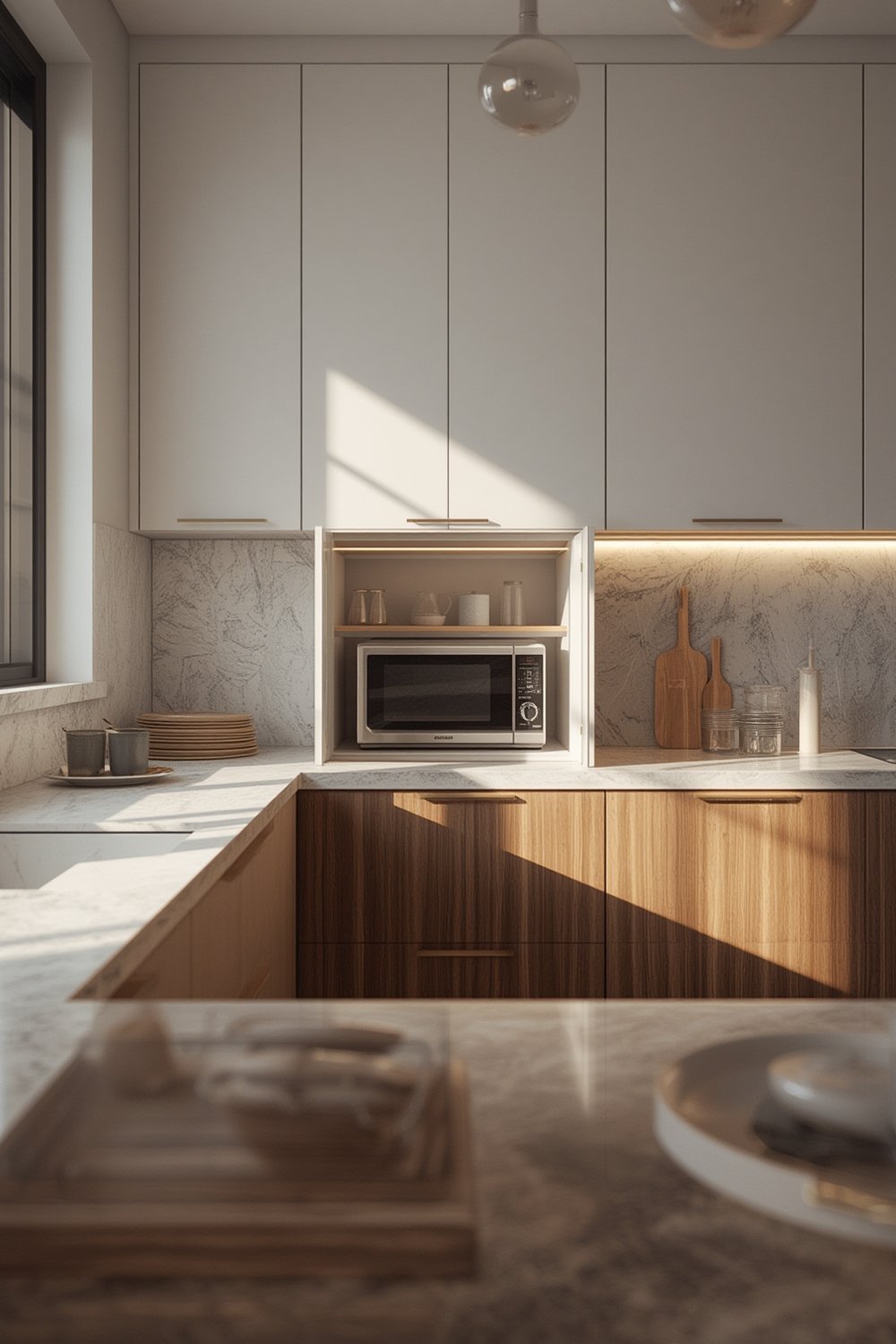
kitchen appliance garage is a simple idea that solves countertop clutter by hiding everyday appliances in a dedicated cabinet space that is easy to access and safe to use.
Key Takeaways
- Plan footprint power and ventilation first to avoid retrofits that add cost and risk.
- Choose a door type and internal layout that matches the appliances you use most often.
- Start with a modular or countertop unit if you want low cost quick wins before a full custom install.
Table of Contents
The Core Concept
What an appliance garage does is remove visual clutter and protect appliances from dust while keeping them accessible for daily use. They range from a simple countertop box with a roll top to a full sized base cabinet with motorized doors. The reason people pick an appliance garage is practical. It reduces cleaning time preserves counter real estate and creates a cleaner kitchen aesthetic.
Step by Step Guide
1. Decide what you will store
Make an inventory. Typical items are coffee maker toaster blender stand mixer and multi cooker. Measure each item height width depth and note where controls and vents are located. Prioritize daily use items for easiest access.
2. Pick a door style
Common door types are tambour door roll up doors bi fold and simple hinged doors with internal pull out trays. Roll up doors save horizontal space and look neat. Hinged doors with a flip up can be simpler to build and to service.
3. Plan ventilation and heat
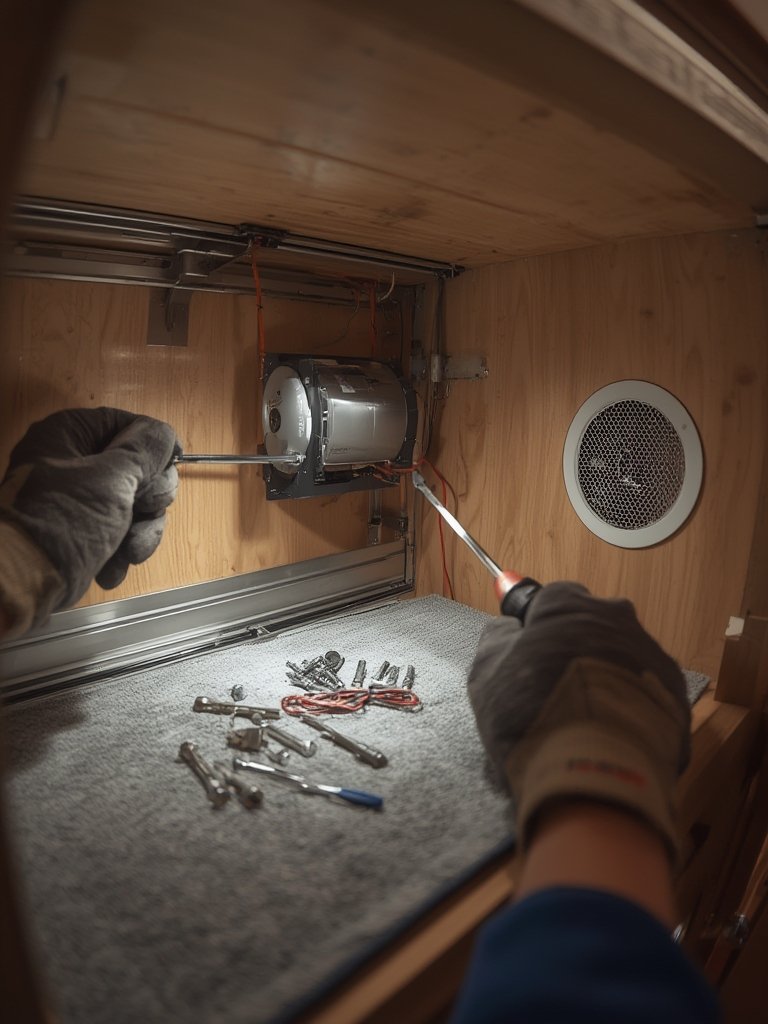
Many countertop appliances create heat or need airflow. Provide clearance at the back and consider vent slots or a perforated rear panel. For high heat items or frequent use add active ventilation such as a small quiet fan routed to a grille. Always keep vents clear of clutter and avoid sealing the cabinet airtight if appliances generate heat.
4. Power and cord management
Locate outlets inside the garage so cords do not run across counters. Prefer a dedicated outlet on a GFCI protected circuit for wet area safety. If you plan to run multiple appliances at once check the load and avoid overloading a single circuit. Use right sized cable management clips to keep cords neat and out of the way of door tracks.
5. Layout and shelving
Mix fixed shelves with pull out shelves at the most used heights. For heavy appliances place them on low pull out trays with full extension sliders. For small items use removable bins and organizers for lids accessories and cords. Consider clear bins for visibility and labeled bins for rarely used parts.
If you want quick storage upgrades consider countertop organizers such as Amazon Basics Countertop & Wall Organization for Utensils White and Grey or a rolling fridge caddy like the YouCopia RollOut Fridge Caddy BPA Free to test layout ideas before committing to cabinetry.
6. Materials and finish
Use moisture resistant plywood or MDF with a waterproof finish for interior surfaces. For high use choose durable finishes that resist stains and are easy to wipe. Consider lining shelves with shelf liner to protect finishes and reduce sliding.
7. Install and test
Install the cabinet shell and test fit each appliance. Check door operation clearance power placement and ventilation while appliances are on. Run a short test cycle for appliances that heat and recheck temperatures inside the cabinet.
For quick accessories to keep small parts tidy try a lid organizer such as YouCopia StoraLid Food Container Lid Organizer or modular bins like Household Essentials Foldable Fabric Storage Bins 6 Piece Set.
Advanced Analysis and Common Pitfalls
Appliance garages can fail to deliver if key constraints are not addressed up front. Here are the most common issues and how to avoid them.
- Poor ventilation leads to overheating and shortened appliance life. Always allow airflow and measure internal temperature during a trial run.
- Insufficient power planning forces unsafe extension lead use. Plan internal outlets and know your circuit capacity.
- Door interference happens when hinge swing or door tracks block appliance handles or controls. Mock up full size to check clearances.
- Inadequate maintenance access makes repairs hard. Use removable panels or doors that allow a service tech to reach the back of appliances.
- Under engineered pull out trays bind or sag. Use full extension heavy duty slides for mixers and other heavy items.
| Risk | Cause | Mitigation |
|---|---|---|
| Overheat | No ventilation or blocked vents | Rear vent panel active fan leave clearance |
| Tripped breaker | Multiple high draw devices on one circuit | Distribute load dedicated outlet review appliance wattage |
| Door failure | Incompatible door system or cheap hardware | Choose tested hardware or consult cabinet maker |
If you prefer testing components before committing to a cabinet try countertop tools like the Instant Pot Duo 7 in 1 Mini to simulate footprint and venting patterns for a multi cooker. For storage bins and drawer organizers use iDesign Slim Clear Plastic Stackable Storage Bin or the OXO Good Grips POP Container to keep small parts tidy.
Conclusion
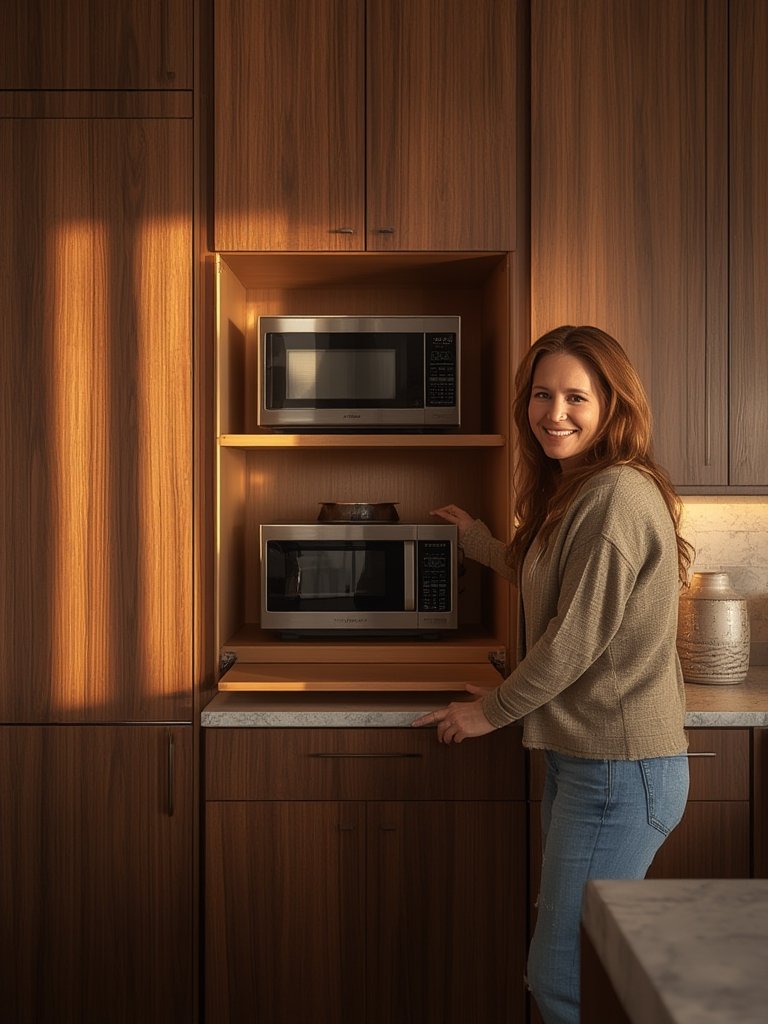
An appliance garage is a focused way to reduce countertop clutter increase kitchen efficiency and protect your appliances. Good planning around appliance footprint ventilation power and door type prevents most headaches and keeps the space functional for years.
Start small with test organizers and modular units then scale to built in cabinetry if it proves useful. The right choice depends on how often you use your appliances and whether you want a low cost fix or a permanent built in solution.
Take one step now. Measure the three appliances you use most and sketch a simple cabinet plan. If you want product ideas see the quick organizers linked above for fast improvements. The next time you walk past your counter you will notice the difference that a properly planned kitchen appliance garage makes.
FAQ
What is a kitchen appliance garage and do I need one?
An appliance garage is a cabinet or enclosed storage area that hides countertop appliances while keeping them accessible. You need one if you want a cleaner counter faster cleaning and organized storage for frequently used appliances.
How do I handle ventilation inside an appliance garage?
Allow rear clearance add passive vents at top and bottom and use a small quiet fan for heavy use appliances. Test internal temperature when a device is running to confirm adequate airflow.
Can I run multiple appliances at the same time in a garage?
Yes but check circuit capacity. High draw appliances can trip breakers if they share a single circuit. Install additional outlets on separate circuits when needed and use GFCI protected outlets near sinks.
What door type is best for a small kitchen?
Roll up or tambour doors save space and look tidy. If budget is tight use hinged doors with pull out trays. Choose the style that fits your use pattern and cabinet layout.
Are there ready made countertop appliance garages I can buy?
Yes there are modular countertop cabinets and roll top boxes. Try a countertop organizer as a trial and then decide if you want a custom built option.
Quick product links for trial items and organizers
- Hefty Slider Freezer Kitchen Storage Bags, Gallon Size, 56 Count
- YouCopia StoraLid Food Container Lid Organizer
- OXO Good Grips POP Container – 4.4 Qt
- Household Essentials Foldable Fabric Storage Bins 6 Piece Set
- YouCopia RollOut Fridge Caddy BPA Free
Context and market perspective